






IPLC

Regulatory infrastructure for Single Family Offices and Single Family Office Funds in the Astana International Financial Centre: the current model and directions for reform
Abstract. This article provides a systematic analysis of the regulatory infrastructure applicable to Single Family Offices (SFOs) and Single Family Office Funds (SFOFs) in the Astana International Financial Centre. The research question is whether the AIFC’s current rules form a coherent two-tier model for managing family wealth, under which intra-family services may be provided pursuant to a regulatory exclusion, while collective investment is conducted through a proportionately regulated fund. Applying formal legal, systemic and functional methods, the article demonstrates that the current framework conceptually distinguishes an SFO as a family management organization from an SFOF as a collective investment scheme, but retains uncertainty at the intersection of GEN 1.1.17, CIS 3.17 and the rules governing a director of an Investment Company acting as Fund Manager. The article examines the qualifying features of an SFO, the boundaries of the family perimeter, the Exempt Fund regime, requirements concerning Professional Clients, minimum assets, governance, AML/CFT, safeguarding of property, taxation and substantial presence. Particular attention is given to the AFSA Consultation Paper dated 15 July 2026, which proposes moving to a model under which an SFOF is managed by an authorized Single Family Office, disapplying the family licensing exclusion once the CIS regime has been elected, increasing regulatory certainty and permitting an Investment Trust as an additional fund form. The article identifies inconsistencies in the proposal, including the discrepancy between the stated availability of an Investment Trust and the draft requirement that the fund be an Investment Company, as well as the need to align the license scope, the number of funds permitted for one family, data confidentiality and transitional provisions. The article’s scholarly contribution lies in presenting the SFO/SFOF regime as a modular regulatory architecture and formulating de lege ferenda proposals for completing that architecture.
Keywords: AIFC, AFSA, Single Family Office, Single Family Office Fund, family wealth, collective investment scheme, Exempt Fund, Fund Manager, Investment Company, Investment Trust, regulatory exclusion, tax exemptions
INTRODUCTION
The institutionalization of large-family-wealth management lies at the intersection of corporate, financial, succession and tax regulation. Unlike a multifunctional management company serving an indefinite range of clients, a Single Family Office is established for one family and must simultaneously ensure confidentiality, continuity, professional management and separation of personal, corporate and collective assets. A dedicated family-office regime has operated in the AIFC since 1 July 2024; AFSA described it as a legal framework enabling SFOs to establish family funds subject to simplified requirements applicable to their managers. (AFSA. AIFC introduces Family Offices Framework, 1 July 2024. URL: https://afsa.aifc.kz/aifc-introduces-family-offices-framework/ )
The relevance of the subject is reinforced by the development of the AIFC asset-management sector. The AFSA Consultation Paper dated 15 July 2026 states that assets under management increased from USD 115 million at the beginning of 2021 to more than USD 6.1 billion by the end of the first quarter of 2025, while the number of registered funds increased from six in 2021 to 196 in 2025. The regulator cites these figures as justification for further refinement of the specialized-funds regime, including the SFOF regime. (AFSA. Consultation Paper AFSA-PSRD-CSP-2026-0001 “Amendments to the AIFC Asset Management Framework”, 15 July 2026, paras. 1–4.)
The practical architecture “family — SFO — SFO Fund — investment assets” used in this study was developed by the authors on the basis of their experience advising on AIFC projects, their own research and discussions with relevant specialists. It distinguishes the financing of the family office itself, the individual management of Family Client assets and the formation of Fund Property, and identifies tax and organizational issues requiring further regulatory and practical verification for each specific project. (The practical architecture was developed by the authors on the basis of their experience advising on AIFC projects, independent research into AIFC acts and discussions with relevant specialists in asset management and family-wealth structuring.)
The research question of this article is whether current AIFC law provides a consistent distinction between intra-family management carried out by an SFO without an ordinary license and regulated collective investment through an SFOF. The central thesis is that the AIFC legal system already contains a functionally viable two-tier structure, but its practical predictability is limited by the mismatch between the literal wording of the licensing exclusion, the rules on voluntary election of the CIS regime and the emerging practical approach. The 2026 Consultation Paper seeks to eliminate this uncertainty, but certain proposed rules require further alignment.
The methodology comprises formal legal analysis of AIFC acts, systemic interpretation of the interrelated GEN, CIS, Glossary, COB and AML rules, functional analysis of the allocation of risks among the SFO, the fund and service providers, and de lege ferenda legal modelling. Academic analysis of the specific AIFC SFO/SFOF regime remains limited because of its recent introduction; accordingly, the principal sources are the rules currently in force, official AFSA materials, the public register, the Consultation Paper, the authors’ own research and materials from professional discussions with relevant specialists. The Consultation Paper proposals are considered solely as legal-policy material and not as current law.
1. THE CONCEPT OF REGULATORY INFRASTRUCTURE AND THE FUNCTIONAL DISTINCTION BETWEEN SFO AND SFOF
For the purposes of this article, regulatory infrastructure means not a single license or legal form, but a coherent body of rules governing: the definition of the family perimeter; the legal personality of the management organization and the fund; the boundaries of licensable activities; investor classification; the formation and safeguarding of property; corporate governance; AML/CFT controls; reporting; taxation; and economic substance. This approach evaluates the regime not by the existence of a single “family” status, but by the capacity of its regulatory modules to form an uninterrupted framework for wealth management.
The distinction between two entities is fundamental. An SFO is a family organization that coordinates investment, administrative and other functions for Family Clients. An SFOF, by contrast, is a Collective Investment Scheme in which property is pooled for a collective investment purpose. It follows that ownership of shares in the SFO is not equivalent to ownership of Units in the fund, and assets contributed to the capital of the SFO do not automatically constitute Fund Property. Conflating these levels creates a risk of mischaracterising cash flows, investor rights and tax consequences.
Table 1. Functional distinction between SFO and SFOF
| Criterion | Single Family Office | Single Family Office Fund |
|---|---|---|
| Function | Organisation of family governance, coordination and provision of services to Family Clients | Pooling of family wealth for collective investment |
| Legal vehicle | Generally an AIFC Private Company; an SFO is not a separate legal form | Investment Company; in the practical model, an OEIC or CEIC; the Consultation Paper additionally proposes an Investment Trust |
| Property | The SFO’s own assets and/or Family Client assets that remain with them under an IMA | Segregated Fund Property formed through subscriptions and other permitted contributions |
| Regulatory regime | GEN 1.1.17 exclusion, subject to the family perimeter; AML/CFT obligations remain | CIS: Exempt Fund, Professional Clients, minimum assets and special rules |
| Economic rights of the family | Corporate rights attached to SFO shares or rights under a services agreement | Unitholder/Shareholder rights relating to NAV, distributions and redemption/exit |
| Key risk | Operating outside one family or providing services to the public | Uncertainty as to the manager’s licensing status and compliance with fund requirements |
In practical terms, this distinction entails three separate channels for the movement of capital: financing the SFO’s operating activities through share capital or shareholder loans; discretionary management of personal portfolios under Investment Management Agreements without transferring ownership to the SFO; and formation of a joint investment pool by subscription for Units or Shares in the SFOF. This three-part model reduces the risk of mixing the management company’s own funds, individual assets of family members and property of the collective scheme. (The authors’ conclusion based on experience structuring family-wealth-management models and independent analysis of the applicable AIFC acts.)
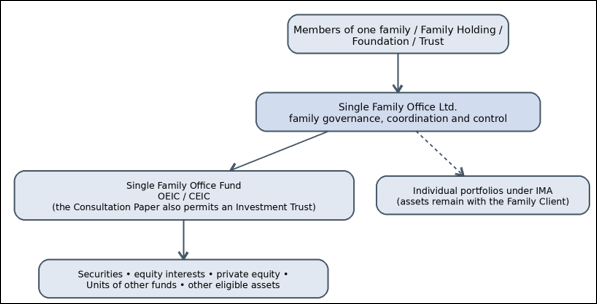
Figure 1. Basic architecture for family-wealth management in the AIFC (prepared by the authors)
2. SINGLE FAMILY OFFICE UNDER CURRENT AIFC LAW
2.1. Qualifying features and the boundaries of a single family
The Glossary defines a Single Family Office as a corporation incorporated in the AIFC that is directly or indirectly owned by members of a single Single Family, does not hold itself out to the public as carrying on Regulated Activities, and provides the relevant services exclusively to Family Clients. SFO status therefore rests on a combination of organizational, ownership, conduct and client criteria. Incorporation of a company in the AIFC does not by itself create the family-office regime if its ownership or actual client base falls outside the prescribed limits. (AIFC Glossary, version V23 (amendments as of 7 December 2025, effective 1 January 2026), definitions “Single Family Office” and “Single Family”. URL: https://aifc.kz/legal-framework/glossary/ )
The concept of a Single Family is linked to a common ancestor and, upon establishment of the SFO, includes that ancestor’s lineal descendants where the common ancestor is no more than three generations removed from the youngest generation of descendants. The family may include adopted, foster and ward children, stepchildren, spouses, widows and widowers; future descendants and their spouses remain within the family perimeter even if the original three-generation limit is subsequently exceeded. This construction is designed to ensure continuity and avoid the need to recreate the SFO as new generations emerge. (AIFC Glossary, definition “Single Family”.)
A Family Client includes a family member, a Family Fiduciary Structure, a Family Entity and a Family Business. A Family Entity is defined by reference to family Control, while a Family Fiduciary Structure may be a Trust, Foundation or similar structure established by a family member or Family Entity for the benefit of family members, charities and related family structures. The client perimeter therefore encompasses not only individuals, but also the legal and fiduciary vehicles used to hold, transmit and protect assets. (AIFC Glossary, definitions “Family Client”, “Family Entity”, “Family Fiduciary Structure”, “Family Business” and “Control”.)
The family-ownership requirement does not mean that all family members must be shareholders of the SFO. A single family member, a family-controlled holding company or a Foundation may be the sole shareholder, while other relatives receive services as Family Clients. Professional managers, investment specialists and independent advisers may serve as directors, Senior Executive Officer or members of the Investment Committee; however, granting them an equity interest must be assessed against the requirement that the SFO be directly or indirectly owned by members of one family.
2.2. The licensing exclusion and its limits
GEN 1.1.17 provides that a person is not regarded as carrying on the listed Regulated Activities where it is an SFO and the activity is performed solely in the course of its duties as a family office. The list includes, among others, Managing Investments, Managing a Collective Investment Scheme, Providing Custody, Arranging Custody, Providing Trust Services, Providing Fund Administration, Advising on Investments and Arranging Deals in Investments. The exclusion is functional rather than institutional: it applies to a particular activity only to the extent that the activity genuinely serves Family Clients of one family. (AIFC General Rules, version V20 (amendments as of 7 December 2025, effective 1 January 2026), rule 1.1.17 and Schedule 1. URL: https://aifc.kz/legal-framework/general-rules/ )
An SFO without an ordinary financial-services license may therefore manage separate family portfolios, provide investment advice, arrange transactions, coordinate custody relationships and support Family Holdings, Trusts and Foundations. However, commencing services for another family, external investors or an indefinite class of persons removes the basis for the exclusion. Following such a transformation, the activities must be assessed under the general licensing regime, and use of the “family office” label cannot substitute for authorization.
The licensing exclusion does not mean an absence of regulatory oversight. The Glossary classifies an SFO as a Designated Non-Financial Business and Profession (DNFBP) if it is not an Authorized Person; conversely, Authorized Person status precludes classification as a DNFBP. In either case, the activity remains within the AML/CFT perimeter, although the legal basis and organizational model of supervision differ. (AIFC Glossary, definition “DNFBP”: Single Family Office is included in the list of DNFBPs; an Authorized Person or Registered Auditor is not a DNFBP.)
The AML Rules apply to Relevant Persons, including Authorized Firms and DNFBPs, and place responsibility for compliance on senior management. Verification of the common ancestor, Source of Wealth and Source of Funds is therefore not a mere fund formality, but part of the family office’s ongoing financial-monitoring infrastructure. (AIFC Anti-Money Laundering, Counter-Terrorist Financing and Sanctions Rules, application provisions and rule 2.2; see also AIFC Practical Guidance to AML/CTF Rules. URL: https://aifc.kz/legal-framework-cat/aml-ctf/ )
2.3. Contractual framework for individual management
For personal portfolios of family members, the clearest structure is an Investment Management Agreement under which securities and cash remain in the Family Client’s account and the SFO receives discretionary authority within an agreed mandate. Such a portfolio is not common family property and should not automatically be characterized as an SFOF. Segregated accounts, investment restrictions and individual reporting preserve personal ownership and prevent the performance of different family members’ portfolios from being commingled.
The SFO’s own operations are financed through different instruments: share issues, additional capital contributions and shareholder loans. If interests in family companies or other assets are contributed to the SFO’s capital, they become property of the SFO and support its corporate balance sheet; they do not create a segregated investment portfolio for a particular relative. This gives rise to a practical rule: joint investments should generally be channeled directly into the SFOF, while the SFO should retain primarily management and service functions.
3. SINGLE FAMILY OFFICE FUND AS A VOLUNTARILY REGULATED COLLECTIVE INVESTMENT SCHEME
3.1. Election of the CIS regime
CIS 3.17 proceeds on the presumption that an arrangement all of whose participants are members of one Single Family is not a Collective Investment Scheme. Before establishing the structure, however, the participants may notify AFSA that they wish it to be treated as a CIS. The rule thus gives a family a choice between a private arrangement outside the funds regime and a regulated collective scheme. The second option is justified where a separate investment vehicle, formalized participant rights, institutional reporting and potential access to the fund tax regime are required. (AIFC Collective Investment Scheme Rules, version V8 (amendments as of 15 December 2024, effective 1 January 2025), rule 3.17. URL: https://aifc.kz/legal-framework/collective-investment-scheme-rules/ )
The legal nature of that election is fundamental. The family character of the investors reduces the classic risk of information asymmetry between a public manager and retail investors, but it does not eliminate risks associated with valuation of illiquid assets, conflicts between family branches, generational transition, related-party transactions and safeguarding of property. An SFOF is therefore not an “unregulated family wallet”; it is a specialized regime in which regulatory intensity is reduced while core fund functions are preserved.
3.2. Exempt Fund, Professional Clients and minimum assets
The current CIS Rules require an SFOF to be an Exempt Fund with at least USD 1 million in investable assets under management, measured at fair market or book value. For CIS purposes, such a fund is treated as a Domestic Fund managed by a Domestic Fund Manager. The general Exempt Fund regime entails private placement to Professional Clients only and a minimum initial subscription of USD 50,000. (AIFC CIS Rules, rules 2.2(a) and 7.2-1.2(a)–(b).)
The concepts of Family Client and Professional Client perform two distinct functions. The former confines the investor base to one family; the latter confirms the investors’ capacity to participate in a private fund without retail-level protection. A Family Entity or Family Fiduciary Structure subscribing for Units must independently satisfy the applicable Professional Client criteria. Direct participation by minors is difficult because they cannot independently undergo the knowledge-and-experience assessment, accept the waiver of retail protections or exercise investor rights. In practice, their interests are represented through a Family Holding, Foundation or Trust acting as Unitholder and establishing rules on distributions, control and succession.
3.3. Legal form, governance and simplified organizational model
The current CIS 7.2-1 framework applies to an SFOF, a Corporate Treasury Centre Fund and a director of an Investment Company acting as Fund Manager of the relevant fund. The regime is therefore oriented towards a corporate investment company. Depending on the investment and liquidity model, practical forms include an open-ended investment company (OEIC) and a closed-ended investment company (CEIC): the former is suitable for liquid assets and regular redemptions, while the latter is suited to private equity, interests in family businesses and other long-term investments. (AIFC CIS Rules, rule 7.2-1.1; the authors’ practical assessment based on experience with corporate fund structures and discussions with relevant specialists.)
An SFOF Manager is exempt from the requirement to maintain a separate Governing Body and to appoint a Finance Officer and Compliance Officer. At the same time, a director managing an SFOF may not act as manager of another fund or manage another person’s assets. These concessions reflect the fund’s closed family character, but do not displace the duties to act in good faith, comply with the investment policy, manage risks and conflicts, maintain the register and properly account for transactions. (AIFC CIS Rules, rules 7.2-1.2(c), 7.2-1.4(a), 7.2–7.13.)
A conflict between rules nevertheless arises under the current framework. CIS expressly exempts an SFOF Manager from the Governing Body, Finance Officer and Compliance Officer requirements, while the current GEN rules impose general mandatory appointments on Authorized Persons and contain no specific exemption for a licensed SFOF Manager. The structure is internally consistent for a self-managed fund relying on GEN 1.1.17 and not constituting an Authorized Person, but a move to a licensed model requires a waiver, a license condition or systemic priority for the special CIS rule. The Consultation Paper proposes to close this gap through express amendments to GEN. (Comparison of AIFC CIS Rules, rule 7.2-1.2(c), and AIFC General Rules V20, rules 2.1.1 and 5.3.1. The draft amendments in the Consultation Paper provide specific exemptions for an SFOF Manager.)
The SFOF Constitution must disclose the common ancestor, the family members served and evidence of kinship, Source of Wealth, the results of Source of Funds verification, persons controlling the SFO, the ultimate beneficial owner, Family Clients, politically exposed persons and compliance with the minimum-asset threshold. This information serves qualifying and AML/CFT functions, but placing it directly in the constitutional document requires enhanced confidentiality and access controls. (AIFC CIS Rules, rule 6.14.)
3.4. Formation of Fund Property and the asset-safeguarding infrastructure
The principal method of forming Fund Property is subscription for Shares or Units. Upon subscription, the money becomes property of the fund and the investor acquires economic and, to the relevant extent, corporate rights determined by the share class, the Constitution and the Offering Materials. Separate classes may be used for different family branches and may differ by currency, income distribution, voting and redemption, but the class structure must not be used to circumvent equal treatment within a class.
Shares in a family company, bonds, Units in other funds or other assets may be transferred to the fund if they comply with the investment policy, there is a contractual basis for a non-cash subscription, the assets are fairly valued and conflicts of interest are addressed. In a family context, there is a particularly high risk that the family member transferring the asset also controls the manager, the fund and the investee. Documented valuation procedures, decisions of the competent bodies and disclosure of the related-party nature of the transaction are therefore required. A loan to the fund may be used as a debt instrument, but does not replace a subscription: the lender does not become a Unitholder and does not automatically participate in NAV.
Segregation of Fund Property is secured by the Fund Manager’s duties to document transactions properly and safeguard Fund Property, together with custody and administration arrangements. CIS permits the absence of a separate Eligible Custodian where, having regard to the nature of the fund and its assets, appointment would be impracticable or disproportionate, provided title is registered in the name of the fund or an appropriate nominee arrangement is in place; AFSA may also grant a waiver. This flexibility is important for illiquid family assets, but transfers greater responsibility for title, the register, valuation and internal controls to the manager. (AIFC CIS Rules, rules 7.3 and 8.2(b)–(e).)
3.5. Uncertainty in the current licensing perimeter
The central problem with the current model emerges from reading three sets of rules together. First, GEN 1.1.17 includes Managing a Collective Investment Scheme within the family exclusion. Second, CIS 3.17 allows the family voluntarily to elect the CIS regime. Third, CIS 7.2-1 contemplates a director of an Investment Company acting as Fund Manager. A literal systemic interpretation permits a self-managed SFOF operated by the family office without an ordinary license, provided all qualifying features of an SFO continue to be met.
The authors’ practical experience, independent research and discussions with relevant specialists support a more conservative working position: in practice, registration of self-managed SFO Funds is regarded as debatable, and the most defensible model for an SFO performing Fund Manager functions is to obtain a limited license. This assessment is not an official AFSA regulatory interpretation and must be tested for each project. In academic analysis, it may be used as a professional assessment of an emerging practical approach, but not as a source of a binding rule. (The position was formulated by the authors on the basis of their experience advising on AIFC projects, independent analysis of publicly available materials and discussions with relevant market specialists. It is not official guidance.)
The public register confirms the existence of the licensed model: since 5 January 2026, MA7 Limited has held an active license for Managing a Collective Investment Scheme specifically in relation to a Single Family Office Fund, subject to a restriction on the permissible type of Investments. This example demonstrates that special authorization is possible, but does not by itself prove that licensing is already a universal regulatory requirement for every SFOF. (AFSA Public Register. MA7 Limited, License No. AFSA-A-LA-2026-0001, active since 5 January 2026. URL: https://publicreg.myafsa.com/license_details/AFSA-A-LA-2026-0001/ )
Accordingly, de lege lata, a legally permissible interpretation of the self-managed model coexists with a practical trend towards authorization. This uncertainty affects not only the license, but also mandatory functions, prudential requirements, tax analysis, AML/CFT status and the scope of responsibility. For that reason, a limited SFO license for Managing a CIS remains the most defensible practical model until official guidance is issued or the proposed amendments enter into force.
4. AFSA CONSULTATION PAPER OF 15 JULY 2026: TRANSITION TO THE AUTHORIZED SINGLE FAMILY OFFICE MODEL
Legal status of the document. Consultation Paper AFSA-PSRD-CSP-2026-0001 contains de lege ferenda proposals. AFSA expressly stated that market participants should not act on the proposals before they are adopted. The deadline for comments is 15 September 2026.
The Consultation Paper was prepared on the basis of AFSA’s supervisory experience and feedback received through the Call for Evidence. In relation to SFOFs, the regulator recognises that the simplified regime is consistent with the private character of the fund and the absence of third-party investors, but requires clarification of the boundary between the special and general CIS regimes, the scope of activities under an SFO-specific license and the consequences of a family structure voluntarily electing CIS status. (AFSA Consultation Paper AFSA-PSRD-CSP-2026-0001, Introduction; paras. 56–60. AFSA launch notice: https://afsa.aifc.kz/afsa-launches-consultations-on-regulatory-amendments-to-asset-management-fintech-frameworks-and-targeted-amendments-to-aifc-rules/ )
4.1. A specific SFOF definition and mandatory authorization of the manager
Proposed new CIS 2.4.16 defines an SFOF as an Exempt Fund constituted as an Investment Company, all investors in which are exclusively Family Clients and Professional Clients, with at least USD 1 million in investable assets under management, and managed by a Single Family Office authorized to Manage a Collective Investment Scheme and simultaneously acting as a director of the fund. Unlike the current model, authorization becomes an element of the definition of the specialized fund itself. (AFSA Consultation Paper, Annex 1, proposed rule 2.4.16.)
Proposed CIS 3.17(c) establishes an anti-overlap rule: where a family structure elects the CIS regime, the GEN 1.1.17 exclusion does not apply to Managing a Collective Investment Scheme or to other Regulated Activities to the extent that they are carried on in connection with managing or operating that scheme. GEN is also proposed to be amended to state that CIS 3.17(c) prevails. This drafting technique removes the possibility of relying on the family exclusion to avoid licensing after a conscious election of the regulated-fund regime. (AFSA Consultation Paper, Annex 1, proposed CIS 3.17(c); Annex 2, proposed amendment to GEN 1.1.17.)
The proposed rules also restrict the manager’s activities: it must not manage assets of persons who are not Family Clients and may not act as Fund Manager of another fund. The first restriction preserves intra-family management, while the second, read literally, creates a “one manager — one fund” model. For families with several investment strategies, currencies, ownership jurisdictions or generational branches, such a prohibition may be excessively rigid unless AFSA approval can be obtained for multiple SFOFs of the same family. (AFSA Consultation Paper, Annex 1, proposed Chapter 11 provision “Rules relating to Single Family Office Funds”, subrule (b). The narrative section of the Consultation Paper refers to new rule 11.6, whereas the corresponding provision in the Annex is numbered rule 11.5; the technical numbering requires alignment.)
4.2. Alignment of organizational requirements
The Consultation Paper proposes express GEN exemptions under which an Authorized Firm that is an SFOF Manager would not be required to appoint a Finance Officer or Compliance Officer or to maintain a Governing Body. The Senior Executive Officer and Money Laundering Reporting Officer requirements would remain, together with the general requirements concerning competence, systems and controls, risk management, conflicts and cooperation with AFSA. The amendment is not merely deregulatory; it also has a system-building effect by aligning the special CIS concession with the general rules applicable to licensed firms. (AFSA Consultation Paper, Annex 2, proposed amendments to GEN 2.1.1 and 5.3.1.)
The guidance to the new SFOF definition also refers to a reduced Base Capital Requirement, exemption from appointing an Eligible Custodian and exemptions from certain corporate functions. These advantages are justified by the absence of external investors, but should be accompanied by alternative requirements concerning legal title, independent valuation of illiquid assets and control of related-party transactions. Proportionality means replacing excessive controls with relevant controls, not eliminating the protective infrastructure. (AFSA Consultation Paper, Annex 1, Guidance to proposed rule 2.4.16.)
4.3. Documentation, audit and reporting
AFSA proposes consolidating the special SFOF requirements in a separate chapter while retaining the expanded list of information to be included in the Constitution. At the same time, the general framework would introduce mandatory external audit for all Domestic Funds, including Exempt Funds, and a more definite reporting frequency. For an SFOF, the proposed annual report would have to confirm that the fund continues to consist of members of one family, disclose changes in the family composition and confirm that the USD 1 million asset threshold continues to be met. (AFSA Consultation Paper, paras. 95–104; Annex 1, proposed amendments to CIS 10.4, 10.5 and proposed SFOF reporting statements.)
The Consultation Paper retains two documents—the Fund Constitution and the Offering Materials—but proposes applying a mandatory baseline Constitution content to all funds and moving to principles-based Offering Materials for Exempt Funds. This approach is reasonable for an SFOF: legally significant rights and mechanisms should be set out in the Constitution, while the investment strategy and risks should be disclosed in the Offering Materials. However, including personal data concerning kinship, Source of Wealth, PEPs and UBOs in the Constitution requires a special access and data-minimization regime, particularly in light of the general proposal that fund documents be supplied free of charge to prospective Unitholders. (AFSA Consultation Paper, paras. 105–120 and proposed amendments to CIS 5.2, 5.4, 5.5, 5.6 and Schedule 1.)
4.4. Investment Trust as a new form of family fund
A significant proposal in the Consultation Paper is the introduction of an Investment Trust as a separate form of CIS. The regulator expressly identifies SFOFs among the funds for which this form should be available. An Investment Trust would be established by a Trust Deed between the Fund Manager and an independent Trustee, registered by AFSA on a joint application, and maintained in a non-public register because of the confidential nature of the structure. The Trustee would hold legal title to Fund Property, owe fiduciary duties, safeguard the assets and potentially perform an oversight function. (AFSA Consultation Paper, paras. 61–83, especially paras. 69–81.)
For family wealth, a trust-based model may be useful where fiduciary separation of title, long-term preservation of property and institutional oversight of the manager are priorities. However, the Consultation Paper contains an internal inconsistency: the policy proposal permits an Investment Trust for an SFOF, whereas proposed CIS 2.4.16 defines an SFOF as a fund constituted as an Investment Company. If retained, the latter wording would block the stated alternative. Before adoption, the definition of SFOF should either be broadened or expressly provide that the Investment Company requirement does not apply to an SFOF established as an Investment Trust.
Table 2. Principal differences between the current model and the 2026 Consultation Paper
| Element | Current regulation | Consultation Paper proposal |
|---|---|---|
| Manager’s licence | GEN 1.1.17 formally covers Managing a CIS; CIS permits a director of an Investment Company to act as Fund Manager | An SFOF must be managed by an authorised SFO; the family exclusion does not apply after the CIS election |
| SFOF definition | Requirements are dispersed across CIS 6.14 and 7.2-1 | Standalone definition in CIS 2.4.16 |
| Investors | Exempt Fund → Professional Clients; the family perimeter follows from CIS 3.17 and the Glossary | Express requirement: only Family Clients that are Professional Clients |
| Organisational functions | CIS grants exemptions from a Governing Body, FO and CO; GEN contains no express coordinating exemption | Specific GEN exemptions for a licensed SFOF Manager |
| Legal form | Investment Company; practical options are OEIC/CEIC | Investment Company under proposed rule 2.4.16; the policy section simultaneously proposes an Investment Trust |
| Audit and reporting | Mandatory CIS audit is not expressly required for all Exempt Funds | Annual audit of all Domestic Funds; specific confirmations for SFOFs |
Taken together, the proposals mark a transition from voluntary entry by a family into the funds regime, potentially with self-management, to proportionate but mandatory authorization of the manager. This transition increases certainty and supervisory transparency, but requires transitional provisions enabling existing structures to obtain a license, amend their documents and reallocate functions without the risk of suddenly ceasing to qualify as a fund.
5. TAX AND ECONOMIC INFRASTRUCTURE
5.1. Qualifying financial services of an SFO
Article 6 of the Constitutional Statute on the AIFC exempts AIFC Participants, until 1 January 2066, from corporate income tax on income derived from investment management of investment-fund assets, their accounting and custody, and related transactions in fund securities; the corresponding services are exempt from VAT. The jointly approved list of financial services expressly includes Managing Investments and Managing a Collective Investment Scheme. (Constitutional Statute of the Republic of Kazakhstan dated 7 December 2015 No. 438-V “On the Astana International Financial Centre”, arts. 6(3), 6(8-2). URL: https://aifc.kz/legal-framework/constitutional-statute-of-the-republic-of-kazakhstan/ ) (List of financial services provided by AIFC Participants, income from which is exempt from CIT and VAT, para. 5(3)–(4). URL: https://aifc.kz/legal-framework/the-list-of-financial-services-provided-by-the-aifc-participants-income-from-which-is-exempt-from-cit-and-vat/ )
Accordingly, the management fee and performance fee of a licensed SFO for managing an SFOF may qualify for the exemption, provided the AFSA Rules and tax requirements are fully satisfied. Remuneration for discretionary management of an individual family portfolio may also potentially fall within Managing Investments. Administrative family-office services, accounting support, concierge services, interest on loans and income from the SFO’s own investments, however, do not become exempt automatically. Contractual and accounting separation among the Fund Management Agreement, Investment Management Agreement and Family Office Services Agreement therefore has tax as well as operational significance.
5.2. Tax status of the fund’s investment income
The authors’ own research and practical experience reveal a difference between the literal wording of the Constitutional Statute and the official AIFC tax matrix. On the AIFC information page, the exemption for a fund’s investment income is linked to the formula “Fund that is managed by the authorized Fund Manager”. This formula supports the conservative practical model of a licensed manager, but the page itself warns that the Tax Code and Article 6 of the Constitutional Statute must be analyzed together. It therefore cannot replace an individual legal classification of the particular income and asset. (AIFC. Tax Regime in AIFC: the wording “Fund that is managed by the authorized Fund Manager” and the general caution regarding application of the Tax Code and Article 6. URL: https://aifc.kz/tax-benefits/ ) (The authors’ conclusion based on an independent comparison of Article 6 of the Constitutional Statute on the AIFC, the official AIFC tax matrix and practical experience structuring fund models.)
A fund-level tax exemption does not extend to operating companies owned by the fund. If an SFOF owns an SPV conducting trading, services, construction, leasing or other operating activities, the profit arises at the SPV level and is assessed under the SPV’s own regime. The fund vehicle should not be used to conflate investment income with operating revenue.
5.3. Substantial presence and separate accounting
An AIFC Participant applying CIT and VAT exemptions must maintain substantial presence. The rules require Core Income Generating Activities to be carried on in the AIFC, an adequate level of operating expenditure and a sufficient number of qualified full-time employees; the Participant must provide an economic justification for its expenditure and staffing. Outsourcing work directly related to CIGA outside the Republic of Kazakhstan is not permitted. Failure to satisfy the conditions results in application of the general tax regime. (Rules on the Substantial Presence of the AIFC Participants Applying Tax Exemptions for the Payment of CIT and VAT, rules 6–13. URL: https://aifc.kz/legal-framework-cat/taxation/ )
For an SFO, substantial presence means that key investment decisions, portfolio oversight, risk management and other profit-generating functions must not exist merely nominally in the AIFC. Separate accounting for exempt and taxable income, and the related expenses, must be embedded in the contractual and governance model from inception rather than reconstructed after the end of a tax period. (Regulations on keeping separate accounting of income subject to CIT exemption and taxable income, and allocation of expenses by AIFC Participants. URL: https://aifc.kz/legal-framework-cat/taxation/ )
6. ASSESSMENT OF THE MODEL AND DE LEGE FERENDA PROPOSALS
6.1. Completing the licensing perimeter and establishing a transitional regime
Mandatory authorization of an SFO managing an SFOF is a justified direction of reform. Voluntary election of CIS status entails acceptance of institutional supervision, and the exclusion for private family services should not continue to apply once a separate fund exists. The rule should, however, be accompanied by a transitional period during which an existing self-managed SFOF can obtain a limited license, replace its manager or leave the CIS regime without prejudicing the rights of Family Clients.
The treatment of acts carried out before a license is obtained should also be expressly regulated, and it should be confirmed that a change in the management model does not call into question the fund’s registration, title to Fund Property or tax periods during which the structure relied in good faith on the literal wording of the rules then in force. Transitional regulation should prevent retrospective recharacterization.
6.2. License scope and the permissible number of family funds
The license scope should clearly distinguish Managing a CIS from management of separate Family Client assets. Three solutions are possible: include Managing Investments in the license alongside Managing a CIS; preserve the GEN exclusion for family portfolios unrelated to the SFOF; or treat ancillary management of Family Clients as included in the specialized authorization. The first option is most predictable where the activity is material, and the second where the services are ancillary. In any event, the anti-overlap rule should not inadvertently prohibit lawful management by the SFO of individual family portfolios outside the fund.
The prohibition on acting as Fund Manager of “any other fund” requires clarification. If its purpose is to exclude services to unrelated families and a commercial multi-family business, it is sufficient to prohibit management of funds whose investors are not members of the same Single Family. An absolute prohibition on a second SFOF may prevent separation of liquid and private-equity strategies, currency portfolios or assets of different family branches. Multiple SFOFs for one family could be permitted subject to adequate resources, control systems and prior AFSA approval.
6.3. Alignment of Investment Company and Investment Trust
The proposal should eliminate the substantive conflict between the policy proposal for an Investment Trust and proposed rule 2.4.16 requiring an Investment Company. Two legislative techniques are available: define an SFOF in a form-neutral manner and list permissible forms in a separate rule, or add the words “Investment Company or Investment Trust” directly to the definition. For an Investment Trust, the requirements concerning a fund director should be adapted because the central actors in a trust-based structure are the Fund Manager and Trustee, not the board of an investment company.
Where a trust-based form is chosen, the exemption from appointing an Eligible Custodian should be separately aligned with the Trustee’s duties to hold and safeguard Fund Property. Otherwise, the same custody risk would simultaneously be treated as excluded and placed on an independent Trustee. Regulatory economy should be determined by function, not by the title of the service provider.
6.4. Confidentiality, AML/CFT and data minimization
Information on the common ancestor, kinship, Source of Wealth, Source of Funds, UBOs and PEPs is necessary for AFSA and AML/CFT purposes, but not all of it should form an immutable public-contractual part of the Constitution. A more balanced structure would separate the documents: the Constitution would state the family-perimeter criteria and the obligation to maintain compliance, while detailed personal data would be placed in a confidential schedule accessible to AFSA, the MLRO, the auditor and authorized persons. Changes in family composition would then not require broader disclosure of personal information or constant material amendments to the principal document.
A similar approach is required for the Investment Trust register. A non-public register is consistent with the private character of the family arrangement, but should not restrict access by the regulator, courts, auditors or persons conducting lawful title due diligence. Confidentiality should be understood as controlled accessibility, not as an absence of verifiability.
6.5. Proportionate governance and independent control
Exemption from a Governing Body, Finance Officer and Compliance Officer does not remove the need to allocate functions. The minimum internal architecture of a licensed SFOF Manager should include a Senior Executive Officer, MLRO, documented investment competence, a risk owner, conflict-of-interest rules, a valuation policy, outsourcing controls and a related-party-transactions procedure. In a small structure, roles may be combined, but independent review should be required where the manager or a family member has a direct economic interest.
The proposal for annual audit of all Domestic Funds should be supported in relation to SFOFs because independent verification is especially important when illiquid family assets are contributed or intra-group transactions are undertaken. AFSA could nevertheless retain a limited waiver for a fund with a simple asset structure where equivalent assurance is provided through other mechanisms. The grounds for a waiver should be transparent and should not depend solely on the family character of the investors.
6.6. Intergenerational participation and professional classification
Guidance is required for minors and future generations confirming that indirect participation through a Family Entity or Family Fiduciary Structure is permissible and explaining how the Professional Client criteria apply to that structure. Foundation or Trust documents should regulate the age at which control is acquired, entitlement to income, powers of a guardian, trustee or council, restrictions on transfer and succession following death. These matters lie outside conventional fund regulation, but determine the resilience of an SFOF as an instrument of family succession.
6.7. Tax certainty
The move to an authorized SFO is consistent with the official tax matrix, but the legal connection between the manager’s status and the investment fund exemption should be stated in a legally binding instrument or official joint guidance. The treatment of management fees, performance fees, discretionary management fees, fund investment income, income from subsidiary SPVs and transfers of family assets should be defined separately. Otherwise, the tax outcome will depend on an information page and individual practice rather than a predictable legal test.
Table 3. Principal proposals for completing the SFO/SFOF regulatory infrastructure
| Issue | Proposed solution | Regulatory outcome |
|---|---|---|
| Overlap between the GEN exclusion and CIS | Authorised SFO as mandatory Fund Manager following a CIS election; express anti-overlap rule | Defined licensing perimeter |
| Existing self-managed structures | Transitional period and protection of prior acts | No retrospective disqualification |
| Management of family portfolios | Separately regulate Managing Investments outside the SFOF | Preservation of SFO functionality |
| One SFO — one fund | Permit multiple SFOFs for the same family with AFSA approval | Separation of strategies without becoming a multi-family business |
| Investment Trust vs Investment Company | Form-neutral SFOF definition and adaptation of the director’s role | Genuine availability of the trust-based model |
| Sensitive data in the Constitution | Confidential schedule with controlled access | Data minimisation and AML/CFT verifiability |
| Organisational concessions | Functional minimum-controls framework and audit | Proportionality without loss of control |
| Tax uncertainty | Binding guidance/joint clarification by income category | Predictability of the tax model |
7. RESULTS AND DISCUSSION
The analysis supports four principal findings. First, the AIFC regime should be understood as two-tiered: the SFO provides intra-family services and individual management, while the SFOF provides collective investment through separate Fund Property. Second, the current system already contains the necessary modules—the family definitions, the licensing exclusion, the possibility of a CIS election, the Exempt Fund regime, special Constitution requirements and simplified governance—but their interaction is not fully aligned.
Third, the uncertainty is infrastructural rather than merely theoretical. The answer to the licensing question determines mandatory appointments under GEN, prudential and supervisory treatment, AML/CFT status, tax positioning and the permissible scope of activities. The public example of a specialized license and the content of the Consultation Paper show that the supervisory model is in practice moving towards an authorized SFO.
Fourth, the Consultation Paper generally restructures the regime appropriately around a conscious election of regulated-fund status and proportionate authorization. Its strengths include a specific SFOF definition, the anti-overlap rule, alignment of GEN and CIS, enhanced reporting and the availability of an Investment Trust. Its weaknesses concern inconsistent legal forms, uncertainty as to the number of funds, the regime for individual management of Family Clients, the volume of personal data and the absence of express transitional arrangements.
The proposed modular concept avoids a false choice between complete deregulation and the ordinary commercial Fund Manager regime. The family character of the structure justifies reducing requirements aimed at protecting external investors, but does not eliminate the need to control title, valuation, conflicts, AML/CFT and succession. The optimal model is not “light-touch” in the abstract, but functionally proportionate to the specific risks of a family-only fund.
CONCLUSION
The AIFC regulatory infrastructure gives a family the unusual opportunity to combine a private wealth-management organization and a regulated fund vehicle within one jurisdiction. The SFO preserves family control and may service personal portfolios, holdings, foundations and trusts; the SFOF allows collective investments to be legally segregated, rights of different generations to be established and the specialized Exempt Fund rules to be applied. This is the principal functional advantage of the structure.
At the same time, current law does not provide a clear answer as to whether the SFO licensing exclusion ceases to apply after the CIS regime is elected. A combined reading of GEN 1.1.17, CIS 3.17 and CIS 7.2-1 permits a self-managed model, while the authors’ research, discussions with relevant specialists and the public license of MA7 Limited indicate a practical preference for an authorized SFO. Pending a regulatory resolution, the most defensible structure is “family — SFO Ltd. with a limited Managing a CIS license — SFOF”.
The AFSA Consultation Paper dated 15 July 2026 proposes to establish precisely this structure in law. The direction of reform should be supported because voluntary election of the fund regime should be accompanied by clear responsibility of a licensed manager. To complete the model, it is necessary to align Investment Company and Investment Trust, determine the permissible number of SFOFs for one family, preserve a clear regime for individual Managing Investments, protect confidential family data, establish transitional provisions and provide binding tax guidance.
The answer to the research question is therefore conditionally affirmative: the AIFC has already formed a conceptually coherent SFO/SFOF infrastructure, but its practical predictability depends on eliminating licensing and inter-rule gaps. Once the Consultation Paper is refined, the regime may become a distinct legal model for family-wealth management combining confidentiality, continuity, institutional discipline and proportionate supervision.
REFERENCES
I. AIFC legislation and rules
1. Constitutional Statute of the Republic of Kazakhstan dated 7 December 2015 No. 438-V “On the Astana International Financial Centre” (as amended).
2. AIFC Financial Services Framework Regulations.
3. AIFC General Rules, version V20, amendments as of 7 December 2025, effective 1 January 2026.
4. AIFC Collective Investment Scheme Rules, version V8, amendments as of 15 December 2024, effective 1 January 2025.
5. AIFC Glossary, version V23, amendments as of 7 December 2025, effective 1 January 2026.
6. AIFC Conduct of Business Rules, version V17, effective 13 January 2026.
7. AIFC Anti-Money Laundering, Counter-Terrorist Financing and Sanctions Rules.
8. The List of financial services provided by AIFC participants, income from which is exempt from corporate income tax and value-added tax.
9. Rules on the Substantial Presence of the AIFC Participants Applying Tax Exemptions for the Payment of Corporate Income Tax and Value Added Tax.
10. Regulations on keeping separate accounting of income subject to corporate income tax exemption and taxable income, and allocation of expenses by AIFC Participants.
II. Official AFSA/AIFC documents and materials
11. AFSA. AIFC introduces Family Offices Framework. 1 July 2024.
12. AFSA. Consultation Paper AFSA-PSRD-CSP-2026-0001 “Amendments to the AIFC Asset Management Framework”. 15 July 2026.
13. AFSA. AFSA launches consultations on regulatory amendments to Asset Management, FinTech frameworks and targeted amendments to AIFC Rules. 16 July 2026.
14. AFSA Public Register. MA7 Limited. License No. AFSA-A-LA-2026-0001.
15. AIFC. Tax Regime in AIFC.
16. AIFC. Guidance for Fund Management Activity and Funds in the AIFC.